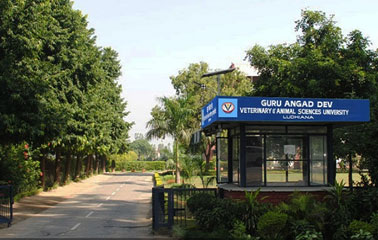

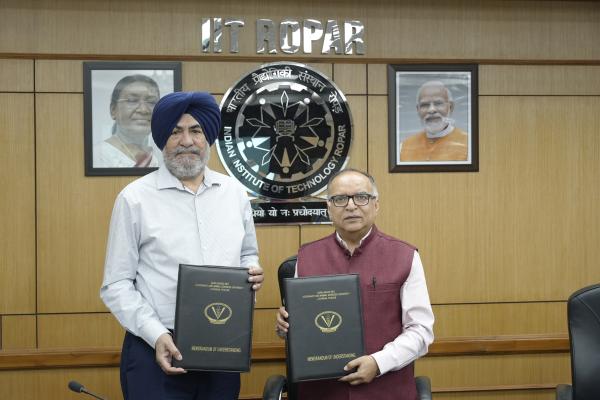
Guru Angad Dev Veterinary and Animal Sciences University, Ludhiana and Indian Institute of Technology, Ropar signed a Memorandum of Understanding (MoU) for accelerating a significant step toward interdisciplinary research collaboration.
The agreement was signed by Dr. J.P.S.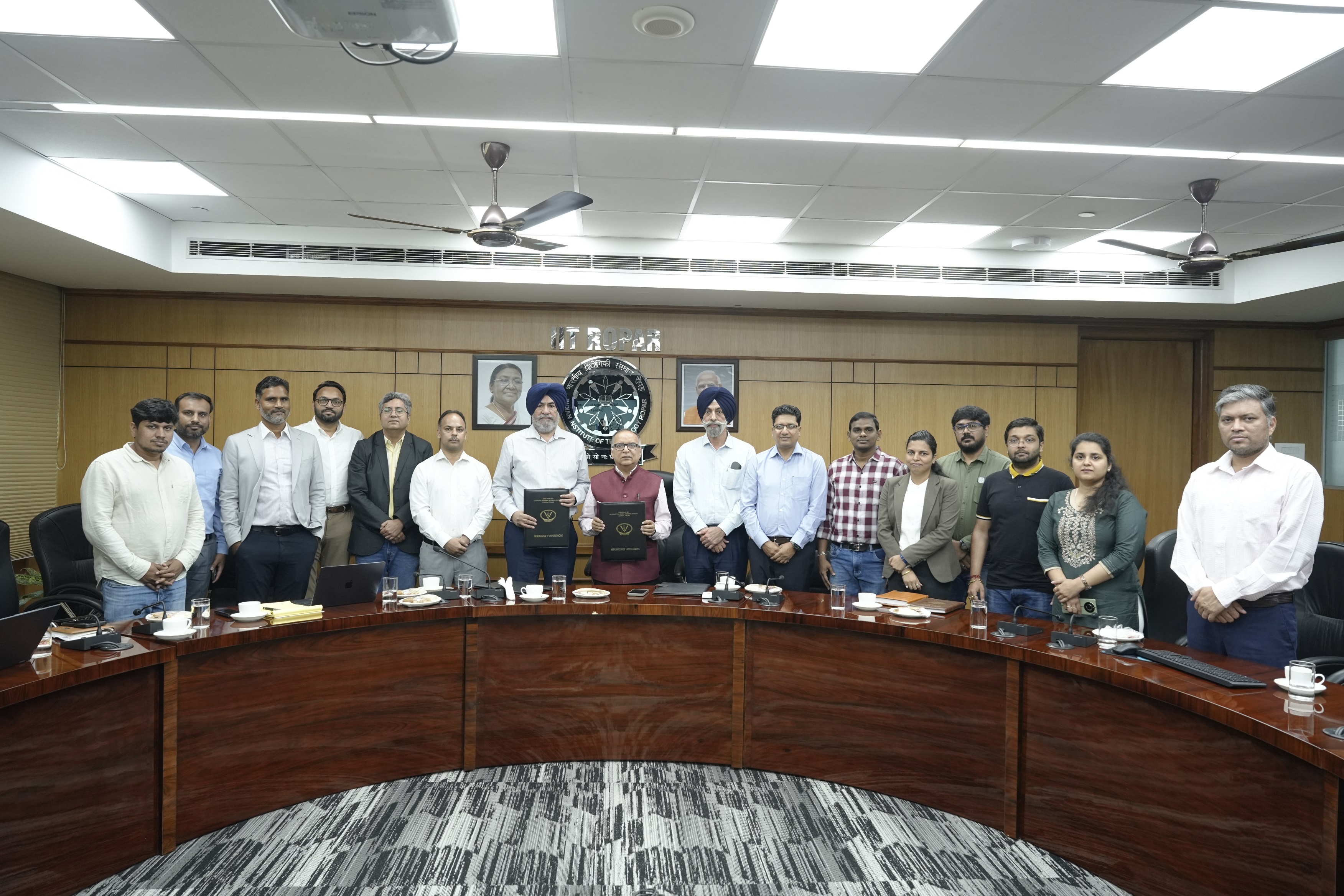 Gill Vice-Chancellor of Veterinary University and Prof. Rajeev Ahujathe Director of IIT Ropar .
Dr. S. S. Randhawa, Director of Research , along with Dr. Kuldip Gupta, HoD, Veterinary Pathology and Dr. N. D. Singh represented the University.
Dr Gill revealed that this collaboration aims to open new avenues in cutting-edge research areas, including artificial intelligence applications in veterinary and biomedical sciences, tumor biology, and infectious diseases. The partnership is expected to foster innovation, promote knowledge exchange, and strengthen research capabilities across both institutions.
Officials of both the institutes expressed optimism that the MoU will advance the development of new age diagnostic tools, data-driven disease modeling, and novel therapeutic strategies, ultimately benefiting both animal and human health sectors.
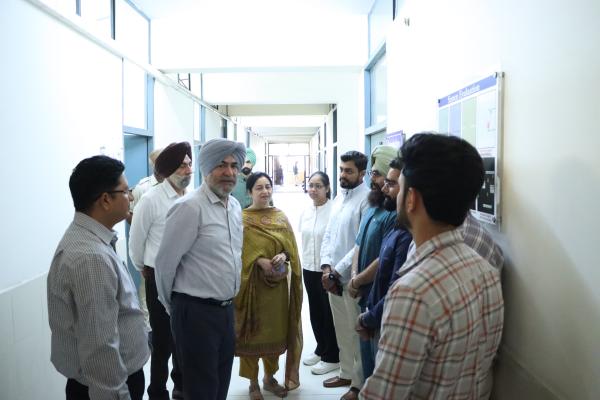
The Placement Cell of Gu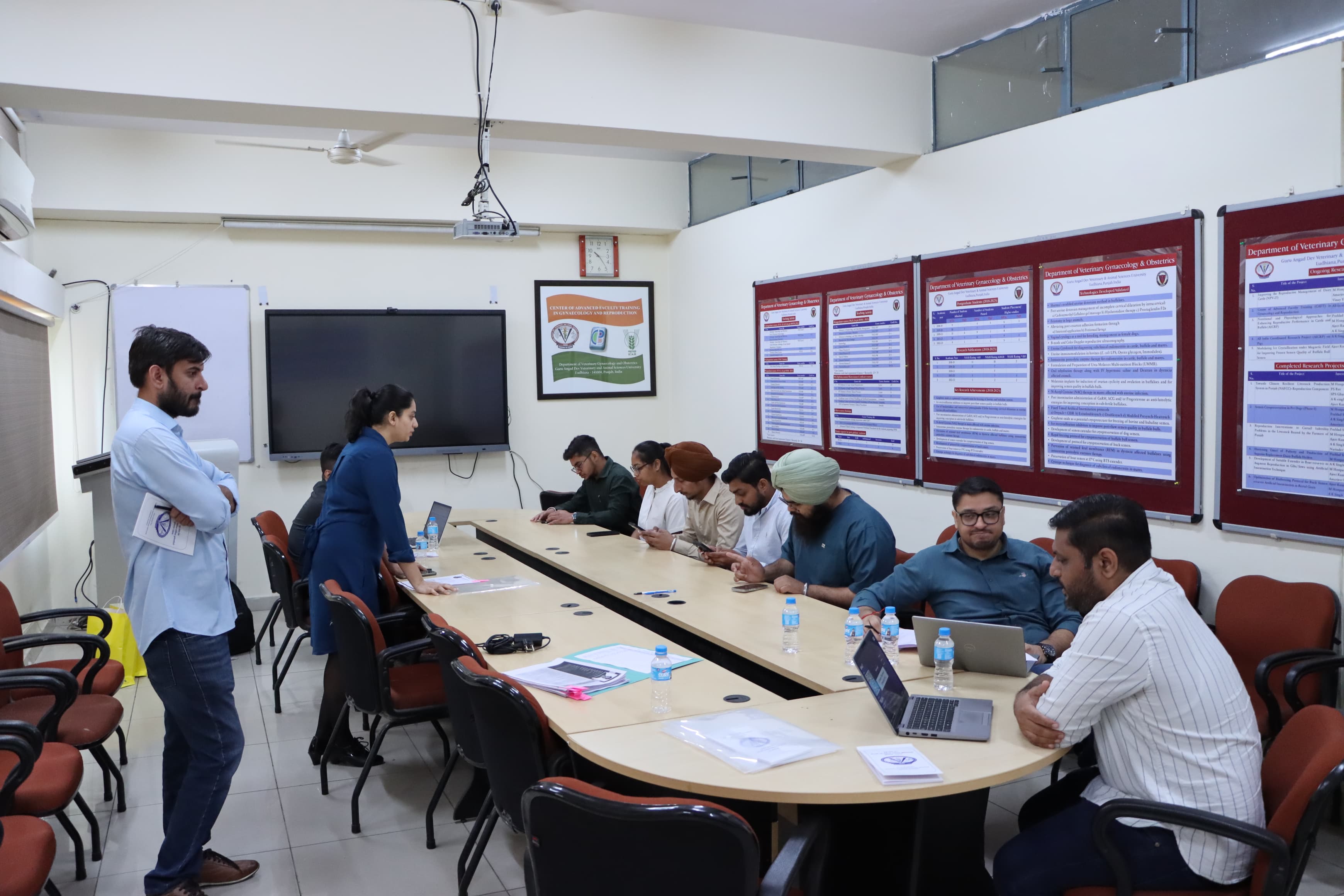 ru Angad Dev Veterinary and Animal Sciences University, Ludhiana organized an impressive and meticulously coordinated placement fair for the veterinary graduates of the 2020 batch, reflecting the institution’s unwavering commitment to academic excellence and professional advancement. The event witnessed enthusiastic participation from 13 reputed companies and veterinary hospitals, offering a diverse range of career opportunities. More than 100 aspiring students from college of veterinary science Ludhiana and Rampura Phul appeared for the recruitment process, showcasing their skills, dedication and professional readiness. Dr. J.P.S Gill, Vice-Chancellor, underscored the growing importance of robust placement initiatives in today’s competitive professional landscape, emphasizing that such efforts are vital for enhancing the career prospects and employability of veterinary graduates. He expressed his deep appreciation for the Placement Cell’s commendable work, describing the initiative as a crucial step towards bridging the gap between academic training and industry requirements.
Dr. Swaran Sing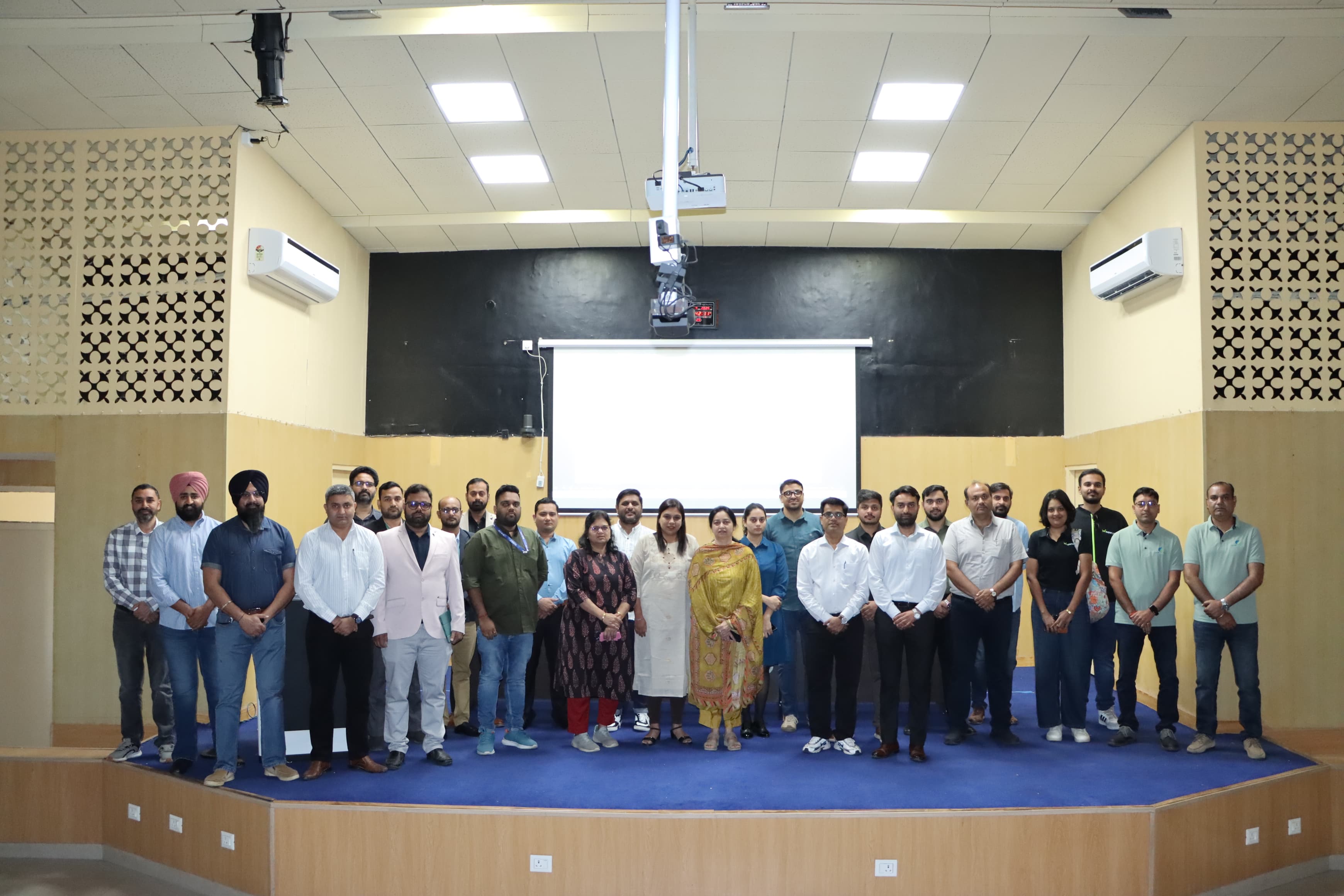 h Randhawa, Dean, College of Veterinary Science, Ludhiana highlighted the significance of placement fairs in providing structured and meaningful career pathways for students. Meanwhile, Dr. Kuldip Gupta, Dean, College of Veterinary Science (Rampura Phul), stressed the pressing need to create diverse employment opportunities for graduates and commended the team’s tireless dedication and forward-looking approach in opening new avenues for professional growth.
The entire event was seamlessly spearheaded by the highly committed and proactive team led by Dr. Varinder Uppal, Placement Officer and Director, Human Resource Management Cell. The team’s coordinated efforts were strengthened by Dr. Nitin Mehta, Placement Coordinator, Dr. Ashwani Kumar, Dr. Devendra Pathak and Dr. Gitesh Saini, Placement incharges, whose collective efforts ensured the event’s resounding success. This vibrant and result-oriented placement drive not only opened promising career pathways for budding veterinary professionals but also reinforced the university’s reputation as a premier institution dedicated to nurturing talent and fostering strong industry-academia partnerships.
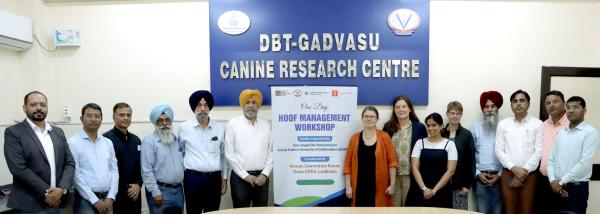
Guru Angad Dev Veterinary and Animal Sciences University, Ludhiana in collaboration with National Dairy Developmen.JPG) t Board (NDDB) successfully organized an international specialized Hoof Management Workshop, aimed at enhancing the practical skills and scientific understanding of faculty, veterinarians, field officers, and livestock professionals in the area of hoof care and lameness management in dairy animals. The workshop was conducted under the guidance of esteemed dignitaries, with the gracious presence of Dr. JPS Gill, Vice-Chancellor as the Chief Guest. The programme witnessed enthusiastic participation from veterinarians of the Animal Husbandry Department, Baani and representatives from collaborating organizations. A key highlight of the workshop was the expert session delivered by visiting Danish specialists Dr C
t Board (NDDB) successfully organized an international specialized Hoof Management Workshop, aimed at enhancing the practical skills and scientific understanding of faculty, veterinarians, field officers, and livestock professionals in the area of hoof care and lameness management in dairy animals. The workshop was conducted under the guidance of esteemed dignitaries, with the gracious presence of Dr. JPS Gill, Vice-Chancellor as the Chief Guest. The programme witnessed enthusiastic participation from veterinarians of the Animal Husbandry Department, Baani and representatives from collaborating organizations. A key highlight of the workshop was the expert session delivered by visiting Danish specialists Dr C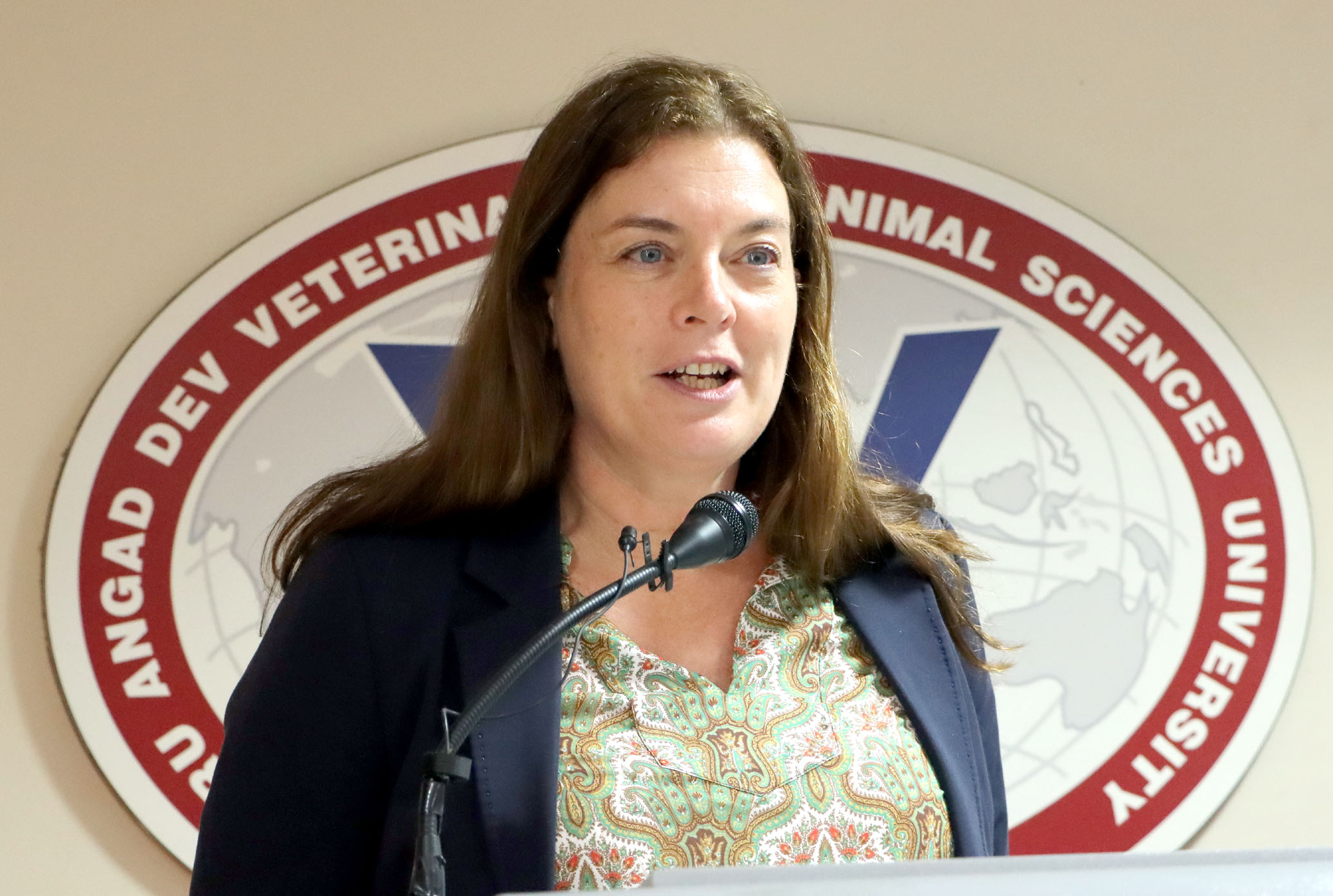 amilla Brasch Andersen, Chief Consultant, International Cooperation, Danish Food and Veterinary Administration and Fisheries Agency, Dr Nynne Capion, Associate Professor, Department of Veterinary Clinical Sciences, University of Copenhagen and Anette Vestergaard, Hoof Trimmer,
.jpeg) demonstrated advanced hoof trimming techniques, with special emphasis on the White Line Methodology—a globally recognized approach for effective diagnosis and correction of claw lesions in cattle. The live demonstrations and hands-on training provided participants with valuable insights into modern hoof health management practices. Dr. Gill emphasized the importance of scientific hoof care in improving animal welfare, productivity, and longevity of dairy animals. He appreciated the
demonstrated advanced hoof trimming techniques, with special emphasis on the White Line Methodology—a globally recognized approach for effective diagnosis and correction of claw lesions in cattle. The live demonstrations and hands-on training provided participants with valuable insights into modern hoof health management practices. Dr. Gill emphasized the importance of scientific hoof care in improving animal welfare, productivity, and longevity of dairy animals. He appreciated the 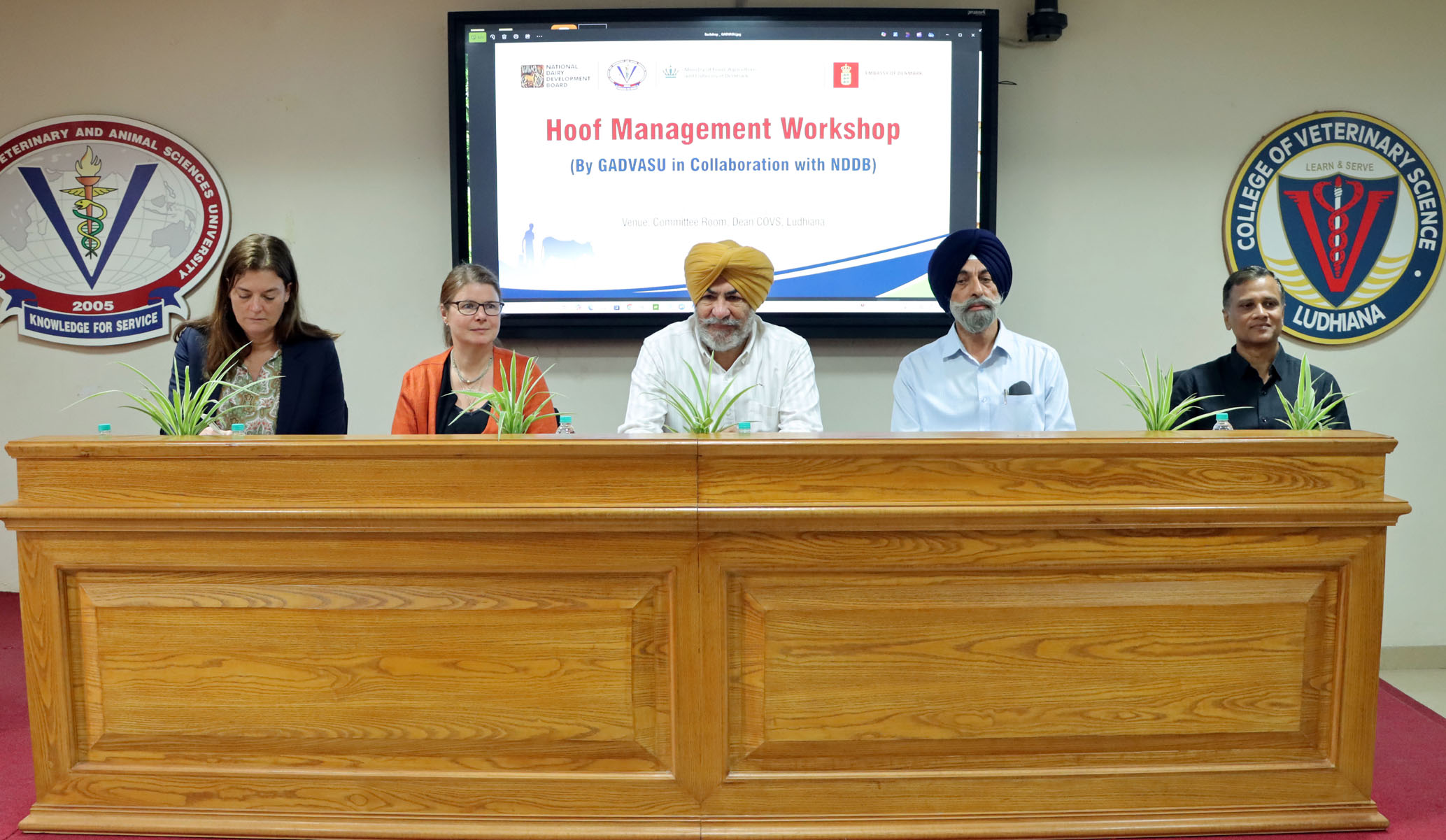 initiative taken by the institution in bringing international expertise to benefit field veterinarians and farmers. Dr. S. S. Randhawa, Dean, College of Veterinary Science highlighted that lameness is a major yet often overlooked issue affecting dairy profitability, and such capacity-building programmes play a crucial role in bridging the gap between research and field application. He also highlighted the significant work
 .jpeg) being carried out by the university in the field of bovine lameness. Dr. J. Mohindroo, Director of Clinics greeted the dignitaries and participants, and underscored the need for regular training programmes to update veterinarians with evolving technologies and evidence-based practices in livestock healthcare. The NDDB’s support and technical inputs were instrumental in the successful conduct of the programme. In an interactive session, participants clarified field-level challenges with experts and discussed practical solutions for improving hoof health management in dairy herds.
being carried out by the university in the field of bovine lameness. Dr. J. Mohindroo, Director of Clinics greeted the dignitaries and participants, and underscored the need for regular training programmes to update veterinarians with evolving technologies and evidence-based practices in livestock healthcare. The NDDB’s support and technical inputs were instrumental in the successful conduct of the programme. In an interactive session, participants clarified field-level challenges with experts and discussed practical solutions for improving hoof health management in dairy herds.
.JPG)
The Department of .JPG) Veterinary Anatomy, College of Veterinary Science, Guru Angad Dev Veterinary and Animal Sciences University, Ludhiana, organized a two-day workshop titled “Smart Barns, Smarter Rearing: AI/ML in Livestock Production” under the outreach initiative of the prestigious PAIR-ANRF project. The workshop was designed exclusively for postgraduate students, aiming to equip them with advanced knowledge and practical insights into the role of Artificial Intelligence and Machine Learning in modern livestock farming.
Veterinary Anatomy, College of Veterinary Science, Guru Angad Dev Veterinary and Animal Sciences University, Ludhiana, organized a two-day workshop titled “Smart Barns, Smarter Rearing: AI/ML in Livestock Production” under the outreach initiative of the prestigious PAIR-ANRF project. The workshop was designed exclusively for postgraduate students, aiming to equip them with advanced knowledge and practical insights into the role of Artificial Intelligence and Machine Learning in modern livestock farming.
The inaugural session was graced by Dr JPS Gill, Vice-Chancellor, Dean, Directors , faculty members; and an invited expert from NIT Rourkela, Dr. Pankaj Kumar Sa, Professor and Associate Dean. While speaking on the occasion, Dr. JPS Gill emphasized the transformative potential of AI/ML technologies in revolutionizing livestock production systems. He encouraged students to develop innovative concepts for future research that incorporate artificial intelligence and machine learning. Dr. SS Randhawa, Dean, College of Veterinary Science elaborated on the objectives of the PAIR-ANRF project, and Dr. SK Uppal, Dean Postgraduate Stu.jpeg) dies urged postgraduate scholars to adopt cutting-edge tools in their research. Dr. Sa highlighted the importance of shaping AI tools to serve both humans and livestock rather than being controlled by them.
dies urged postgraduate scholars to adopt cutting-edge tools in their research. Dr. Sa highlighted the importance of shaping AI tools to serve both humans and livestock rather than being controlled by them.
Dr. Devendra Pathak, Principal Investiga.JPG) tor of the project and Organizing Secretary, shared that over the two days, participants engaged with diverse topics, including: Precision Livestock Farming, Application of Sensor Technologies in Dairy Farms, Livestock Activity Monitoring with Computer Vision & Machine Learning, and tools for Predicting Cattle Health Status Using Physiological and Behavioural Indicators. The sessions blended theoretical insights with practical demonstrations, sparking enthusiastic participation and dialogue among students.
tor of the project and Organizing Secretary, shared that over the two days, participants engaged with diverse topics, including: Precision Livestock Farming, Application of Sensor Technologies in Dairy Farms, Livestock Activity Monitoring with Computer Vision & Machine Learning, and tools for Predicting Cattle Health Status Using Physiological and Behavioural Indicators. The sessions blended theoretical insights with practical demonstrations, sparking enthusiastic participation and dialogue among students.
The valedictory function was graced by Dr. R. S. Grewal, Director of Extension Education, and Dr. Varinder Uppal, Director, HRMC. Dr. Grewal lauded the initiative, encouraging students to embrace technological innovations for advancing sustainable livestock farming. He underscored the importance of interdisciplinary collaboration in shaping the future of animal agriculture.
The workshop concluded with a strong message of innovation, collaboration, and empowerment, leaving postgraduate students inspired to integrate AI/ML tools into their academic and professional pursuits.