
Diseases transmissible between animals and humans (Zoonoses), along with the growing threat of antimicrobial resistance (AMR), are increasingly recognized as critical challenges affecting animal health, human well-being, and rural livelihoods. Poor farm biosecurity can accelerate the spread of these threats, undermining livestock productivity and posing risks to public health. Addressing such issues at the grassroots level is essential to protect both communities and the economy.
With this vision, the Centre for One Health (COH) at Guru Angad Dev Veterinary and Animal Sciences University , Ludhiana, under the Asian Development Bank (ADB) and Zenex-funded project, organized a two-day training programme for livestock farmers of Faridkot district on 12–13 August 2025 in collaboration with Krishi Vigyan Kendra (KVK), Faridkot, Punjab Agricultural University (PAU). The initiative aimed to equip farmers with practical skills and scientific knowledge to prevent the spread of animal-to-human diseases, promote judicious antibiotic use, and strengthen farm biosecurity.
A total of 73 livestock farmers participated in the training, with notable representation from women, reflecting increasing gender participation in livestock farming. The sessions were designed to be interactive, combining expert lectures, hands-on demonstrations, and group discussions to ensure that recommendations could be easily adapted to day-to-day farm practices.
Dr. J.P.S. Gill, Vice-Chancellor, praised the Centre for One Health for strengthening livestock farmers’ capacity to address AMR and animal-to-human disease challenges through holistic strategies, emphasizing that awareness is the first and most critical step in combating these threats. Dr. J.S. Bedi, Director of the Centre, highlighted the Centre’s sustained efforts to promote responsible 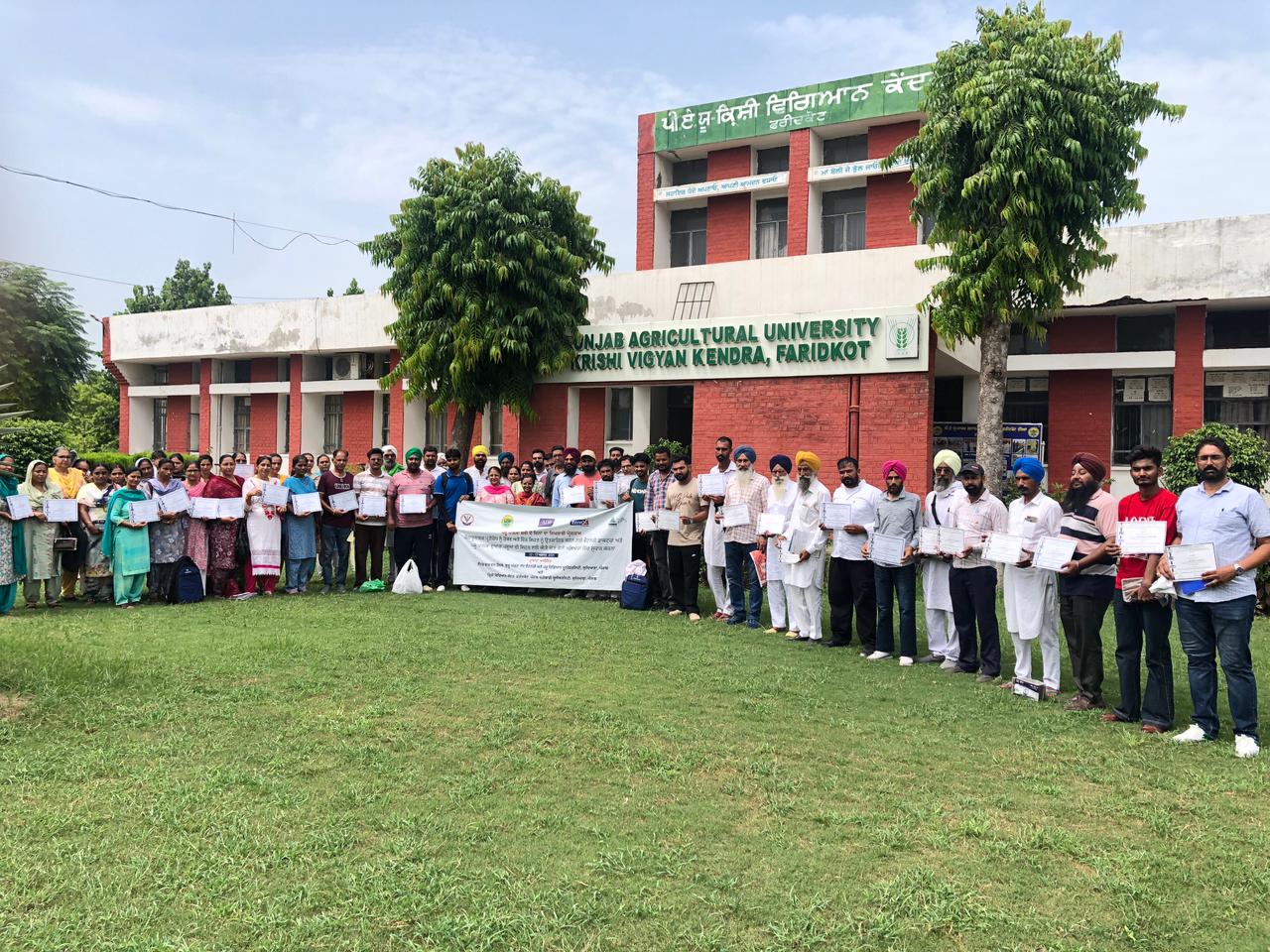 farming practices, protect public health, and create disease-resilient livestock systems. Dr. Rakesh Kumar, Incharge, KVK, Faridkot underlined the importance of judicious antibiotic use and preventive measures, noting that proactive health management is key to avoiding costly disease outbreaks.
Dr. Deepali Kalambhe, Organizing Secretary, expressed appreciation for the farmers’ active engagement and shared practical guidance on responsible antibiotic usage, preventing zoonotic diseases, and integrating the One Health approach into routine farming. Dr. Gurlal Singh Gill, Scientist, KVK Faridkot, played a pivotal role in mobilizing participants and facilitating the smooth execution of the programme.
Experts from Vet Varsity and PAU addressed a wide range of topics, including disease prevention and vaccination schedules, alternatives to antibiotics, effective farm biosecurity measures, clean milk production, and promoting gender equality in farming. Farmers were also introduced to cost-effective, field-friendly solutions to improve herd health and reduce dependence on antibiotics.
The event concluded with an interactive Q&A session, where farmers raised practical queries about common livestock ailments, vaccination timing, and strategies to maintain hygienic farm environments and Brucellosis. Participants expressed their appreciation for the training and requested that such programmes be conducted regularly.
This initiative not only reflects Varsity ’s commitment to a One Health approach integrating animal, human, and environmental health, but also strengthens the bridge between university research and field-level practices, ensuring that scientific knowledge translates into tangible benefits for farming communities.